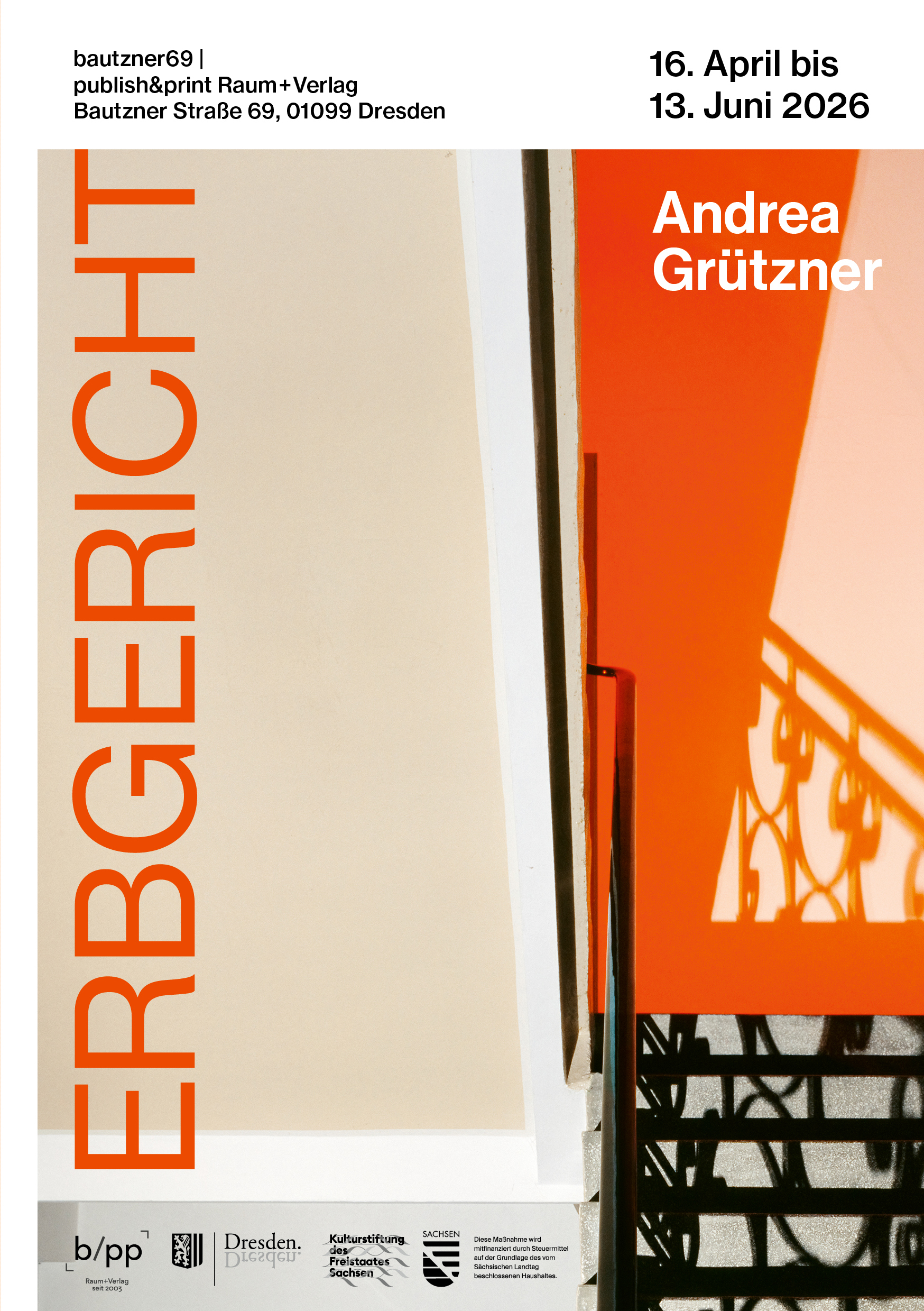
Erbgericht
Using analog large-format photography and precisely controlled lighting, she transforms these interiors into complex pictorial spaces: wall paneling, furnishings, and ornamental details emerge from the everyday through intensely colored shadows and become abstract compositions in which past, present, and projection overlap in labyrinthine ways.
Erbgericht thus appears less as a documented place than as an artistic portrait in which collective experience, regional history, and personal memory have sedimented. The photographs make visible how social transformations are inscribed into architecture, material, and atmosphere.
At the same time, the Gallery of the Kustodie on the campus of TU Dresden presents the exhibition Rasenstücke, alongside the series Arkadia, featuring in particular new works by Andrea Grützner created in collaboration with the university’s teaching and research collections. While Erbgericht focuses on a site of human community and memory, Rasenstücke shifts attention to habitats situated between nature and science. Together, the two exhibitions unfold a dialogue about places and objects in which time continues as trace and stratification.
b/pp: bautzner69/publish&print, Dresden
Erbgericht
Back to News